
What weeping tile does, and how it fails
A perforated pipe runs around the outside of the footing and carries groundwater to an outlet — a storm connection, a sump, or daylight on a sloped lot. It keeps the water table below the slab. Older Innisfil houses have short clay tiles laid end to end, or first-generation corrugated plastic with no filter cloth. Fine sand and silt wash in through the joints and slots, the pipe fills, and the water that used to drain now sits against the wall and under the floor.
How we replace it
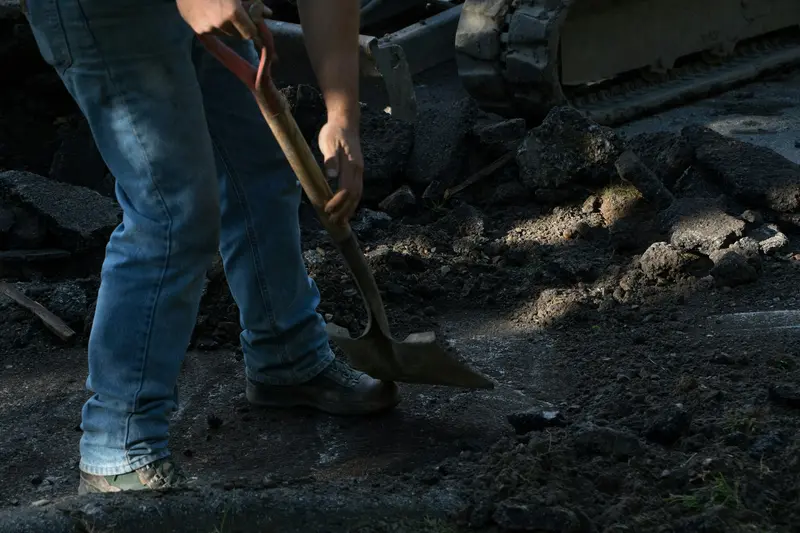
A trench is excavated along the wall to below the footing. The old drain comes out. New perforated pipe is laid on a bed of clear stone with a consistent fall, covered with stone to well above the pipe, and the whole run is wrapped in filter cloth so fines cannot get back in. It is tied to the existing outlet if the camera shows that run is sound, or to a new sump. While the wall is open it is cleaned and sealed — replacing the drain without a membrane leaves half the job in the ground.
The surface water goes with it
Most of what a drain handles never needed to reach it. A single downspout discharging at the wall delivers hundreds of litres in one storm; a lawn graded toward the house sends the melt straight to the footing. Extensions, splash pads and regrading are done at the same time as the drain, and are listed in the scope.